Stories

These interactive stories are aimed at EU policymakers and African stakeholders. All stories are relevant to all African countries, but some present country specific data.

This StoryMap presents the purpose, progress, and impact of the RCoE initiative as it works to strengthen biodiversity conservation, sustainable land use, and climate-resilient ecosystem management across Eastern and Southern Africa.

The number of African rhinos is increasing despite poaching. By the end of 2022, it is estimated that there were 23,290 rhinos in Africa, a 5.2% increase compared to 2021. However, at least 561 rhinos were illegally killed during 2022. South Africa, which is home to the majority of rhinos, recorded 448 rhinos illegally killed in 2022, a similar figure to 2021. In Namibia, poaching increased with 93 rhinos killed compared to 47 the previous year. In Kenya, the number of rhinos killed dropped from six to one. Thanks to protection and biological management initiatives, the total number of black rhinos increased to 6,487 (a 4.2% rise), while white rhinos increased by 5.6%, reaching 16,803 individuals. This is the first increase in white rhino numbers since 2012. This sotymap illustrates the distribution of rhinos in Africa and the efforts of the BIOPAMA project to conserve them.
In this StoryMap, we aim to raise awareness about gorilla conservation and their distribution across countries. Despite a long history of conservation efforts, the two species and their related subspecies are still listed as endangered and critically endangered on the IUCN Red List. Protected and conserved areas and Key Landscapes for Conservation and Development play a pivotal role for gorilla conservation

The IMET tool and the coaching approach have strengthened the community dynamics of managing Marine Protected Areas in Senegal.This storymap describes a case study of Marine Protected Areas in Senegal that have started using the IMET mana

Wetlands, a term that encompasses various ecosystems, are complex environments found in all biomes. They provide essential ecosystem functions and services and, due to their “ecotone” characteristics, are hotspots of biodiversity.

This is a story of conservation resilience in two countries, Liberia and Cote d’Ivoire, which are part of the West Africa Biodiversity Hotspot. IMET assessments were conducted in the landscape areas to support decision-makers in adopting effective strategies
New Technologies for Wildlife Conservation. Over the last decade, the total surface of protected and conserved areas has increased, demonstrating the success of area-based conservation efforts. However, the global community is aware that establishing new protected areas is not enough to ensure biodiversity conservation. How can the management of protected areas be supported through tailored strategies and investments? And how can conservation efforts and their impacts be monitored over 30% of the global surface?To address conservation challenges and monitor wildlife, practitioners and scientists have adopted several new technologies to collect, analyze, and share data. According to a recent survey of nearly 250 experts from 37 countries, camera traps, GIS and remote sensing, and machine learning and computer vision are the most widely used tools. The survey also highlighted key constraints faced by users and developers, as well as future directions and primary opportunities for growth.
BIOPAMA at the International Day of Biological Diversity As a matter of a fact, biodiversity has been declining at an alarming rate in the last decades due to the human pressure and activity. In response to biodiversity loss, during the 1992 Rio Earth Summit, the Convention on Biological Diversity (CBD) was opened for signature. The Convention reflected the importance of biodiversity and its ecological, environmental, cultural, social and economic values. Understanding the biodiversity trends provides a basis for evaluating the integrity of ecosystems and their responses to disturbances and promotes conservation actions to call a halt to biodiversity loss.

Supporting Conservation Strategies, Improving Biodiversity Protection. Systematic monitoring of biodiversity status is essential to address the biodiversity crisis we are facing.

World Heritage sites are recognized as having “outstanding universal value” under the Convention Concerning the Protection of the World Cultural and Natural Heritage (the World Heritage Convention). To be inscribed on the World Heritage List, a site must meet one or more of the ten World Heritage criteria, be relatively intact, and fulfill strict protection and management requirements. For decades, the European Union (EU) has supported the better protection, management, and governance of protected and conserved areas to ensure benefits for nature and people. EU support, both financial and technical, has been provided through a wide range of direct and indirect mechanisms, including many programs and projects targeted at specific World Heritage sites

Achieving conservation goals by improving management effectiveness of protected areas: Burundi case-study

In early March 2021, a group of researchers from the School of Wildlife Conservation (SOWC) at the African Leadership University, in collaboration with the BIOPAMA Team at the Joint Research Centre-European Commission, published a new rep

How geographical analyses support European Commission efforts to unlock tangible impact through the AU-EU Innovation Agenda

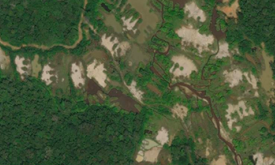
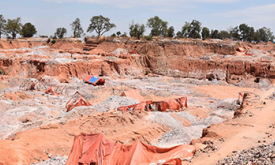
Monitoring compliance of gold mines in Republic of Congo using earth observation.

Securing a sustainable supply of cobalt for a low-emissions and digital future

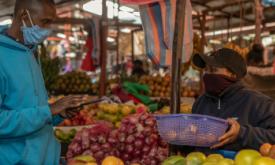
Falling remittances could remove a major source of income for people in several African countries.

Assessing the vulnerability of African countries to infectious disease outbreaks and the role of water, sanitation and hygiene (WASH) services in preventing them.

Participatory approaches for better decision making that benefits the biodiversity, the climate and the people.

Exploring the environmental impacts of food consumption with the example of African cocoa.

The effective protection of coastal and marine ecosystems

The Water-Energy-Food-Ecosystems Nexus in the Senegal River Basin

A bibliometric analysis of Africa-focused research by the Joint Research Centre to support science diplomacy

Nature-based climate solutions should look beyond forests for opportunities in open ecosystems

Urban growth and regional connectivity across a youthful continent

Monitoring climate extremes impact on Agriculture in Southern Africa with the Anomaly Hotspots of Agricultural Production (ASAP).

The facets of an African economy based on wildlife resources

Presenting the eStation, a software deployed in Africa to acquire and process Earth Observation data, and two of its applications for fishing (in Tanzania) and farming (in the Sahel).

Impacts of the COVID-19 pandemic on migration flows

Unleashing clean energy potential in Africa